What does that mean for our working relationships?
-
For commercial folk, understanding and leveraging these differences is pivotal for fostering and then enabling a cohesive and productive workforce.
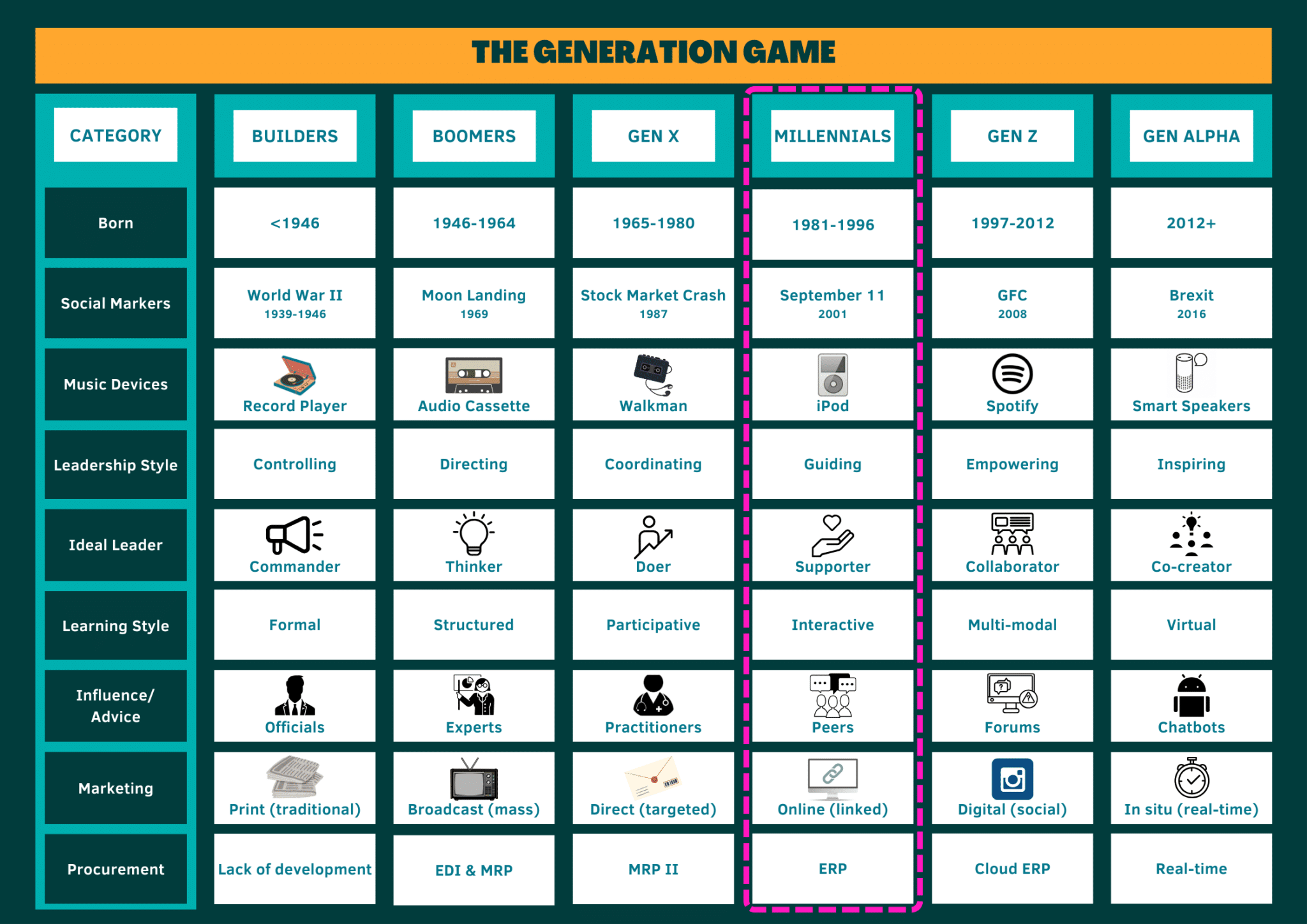
Figure 1 – The Generation Game
Millennials (Generation Y), typically defined as individuals born from 1981 to 1996, are distinct from previous generations in several ways that influence their roles and impact in the procurement profession. As this generation gradually occupies more pivotal roles in organisations (62% of millennials now have direct reports, Forbes 2020)[1], their values and technological proficiency are significantly reshaping the landscape of procurement.
The following top-3 areas are also important for millennials in the commercial environment:
1 / Technology Adoption
Millennials are the first generation to grow up with the internet and digital technology, making them inherently comfortable with leveraging technology in professional settings. In fact, a 2019 Microsoft survey found that 93% of millennials credited up-to-date technology as being a key part of their working environment.[2]
For procurement experts, this means quickly adopting advanced technologies like e-procurement systems, automated supply chain tools, and AI-driven analytics. Their tech-savvy approach streamlines operations, reduces costs, and boosts efficiency. Interoperable solutions ensure seamless integration and a single source of data truth. Compound this with the new generational low-code/no-code and hosted solutions, simplification, configuration, and user-interfaces have become accessible overnight, literally
2 / Value-Driven Procurement
This generation is known for valuing transparency, sustainability, and corporate social responsibility. Millennials tend to favour working for, investing in and purchasing from companies that prioritise ethical practices. A 2022 study by Stanford Graduate School of Business showed that c.80% of millennial/Gen Z investors were eager to have fund managers pursue ESG objectives. By Contrast, less than 40% of the Boomer generation showed the same interest[3].
In procurement, this alternative attitude means a shift towards more sustainable sourcing strategies, greater emphasis on supplier diversity, and ethical supply chain practices. Public procurement alone accounts for 15% of the world’s greenhouse gas emissions[4]. Addressing this issue will be central for millennial decision-makers. Not only does it have an environmental benefit, but it can help businesses build better reputations and achieve greater long-term sustainability.
3 / Collaborative approaches
Millennials often favour teamwork and collaboration over hierarchical and competitive ways of working. In fact, it’s been reported that 75% of millennials believe prioritising collaboration with new partners over continuing old business practices will be critical to future success[5]. In procurement, this can lead to more collaborative supplier relationships and a focus on building partnerships rather than viewing suppliers merely as vendors. This approach can lead to innovations, improved service levels, and more resilient supply chains.
Having experienced rapid technological changes and various economic fluctuations, millennials value flexibility and agility. In a procurement context, this translates to more dynamic sourcing strategies that can adapt to changing market conditions and business needs. This agility can be crucial in navigating global uncertainties such as those caused by political changes, pandemics, or economic instability.
Conclusion
Whilst all generations are important in the workplace, millennials are poised to bring significant changes to global organisations. By integrating technology, prioritising ethical practices, fostering collaboration, and leveraging data, they can help drive cost-consciousness towards a more strategic, efficient, and responsible future. As organisations look to thrive in an increasingly complex global market, embracing these millennial-driven changes will be key to staying competitive and resilient.
If you are interested in discussing digital leadership, then get in touch with Joe Gibson, Head of Digital Innovation at 4C and we’ll be happy to help.
[1] Under New Management: Millennials As Successful Managers (forbes.com)
[2] Understanding Millennials’ And Technology’s Role In The Workforce, Part One (forbes.com)
[3] The ESG Generation Gap: Millennials and Boomers Split on Their Investing Goals | Stanford Graduate School of Business
[4] Green Public Procurement: Catalysing the Net-Zero Economy | World Economic Forum (weforum.org)
[5] AmexBusinesstheMillennialWay.pdf (americanexpress.com)