In April, UK Scientists were granted funding (CIEL 2025)to investigate geoengineering projects aimed at blocking sunlight to reduce surface temperatures and slow down climate change.
Whilst the thought of the UK, a country famous for its complaints about rain and poor weather, seeking to reduce sunlight may seem like a scientist’s take on an April Fool’s joke, it shouldn’t be considered a laughing matter. It only goes to highlight how urgent the issue of climate change has become – so much so, that the Government believes that only something so radical as occasionally blocking sunlight may impact it.
But are things as doom and gloom as they appear on the surface? It can be incredibly difficult to cut through the noise that comes from various parties about Net Zero damaging the economy and climate change being overblown. At times we can’t tell who is “right”. After all, many of the actions we have been asked to take so far seem to have made little dent into the crisis as a whole, but that doesn’t mean we aren’t making progress.
The UK as a nation has a habit of being reserved when it comes to shouting about things it is good at, and Sustainability is no different. For example, the UK ranked third globally in a 2024 study (GreenMatch 2024) that combined scores from four different major climate studies.. Diving deeper, the UK came second in Yale’s Environmental Performance Index (EPI), and fourth in MIT’s Green Future Index (GFI), which – together –evaluated over 60 performance indicators to calculate their results. If you consider these statements, alongside the fact that the UK’s 2024 energy mix sourced 50.8% renewables (the first time it has ever been higher than fossil fuels), you might see that we are moving in the right direction.
So why all the negativity? There is no doubt that certain green practices can cause perceived and actual negative impacts in the short-term, but that doesn’t mean they don’t provide long-term gains, or that they aren’t a necessity.
Within the current national and global economic climate, it is tempting to try and blame something ‘new’ such as Net Zero, and resort to implementing ‘quick-fixes’. This unreasoned thinking can occur within business too, clouding the numerous opportunities available to support achieving Net Zero targets, such as boosting green credentials and focusing on sustainable economic benefit.
At 4C, we believe in tackling Sustainability through a positive lens, utilising our Prosperity Framework to support businesses reach their Sustainability targets through three key pillars: Ethical, Environmental and Economic. With this Prosperity Framework, we help clients understand their current approach and risk exposure and how best to develop a full programme to deliver prosperity through Sustainability.
By working closely with our clients to understand what their strategic objectives and core values are, we build a bespoke, yet actionable transformational roadmap. By targeting various aspects under the umbrella of Sustainability, our maturity assessment diagnostics help our clients deliver long-term prosperity.
How does the 4C Prosperity Framework and its 3 pillars help you achieve long-term success?
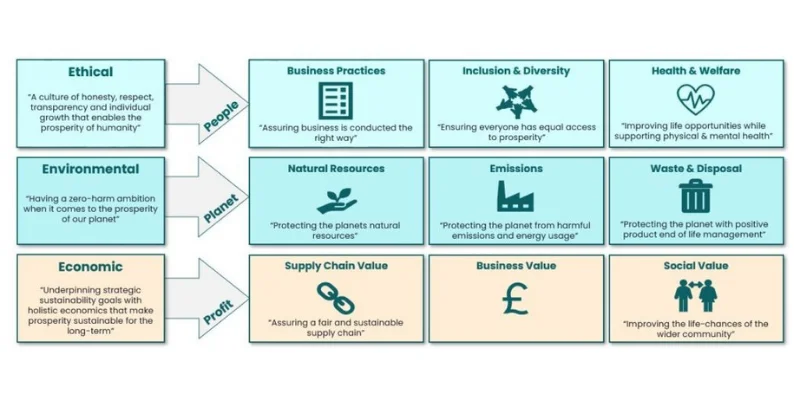
Pillar 1: Ethical
“A culture of honesty, respect, transparency and individual growth that enables the prosperity of humanity”
Sustainability isn’t all about emissions and waste, it also encompasses how we act and treat each other in our day to day lives, and the considerations we take to make the world a fairer and better place. By reviewing Ethical aspects of Sustainability, we can help to embed fairer and transparent practices into our clients that help both individuals and teams prosper.
Pillar 2: Environmental
“Having a zero-harm ambition when it comes to the prosperity of our planet”
Carbon emissions, waste and the use of natural resources form the bedrock of what most people would consider Sustainability. Through data-led insights and targeted action, we can support our clients in understanding their impact on the world and build a pathway to achieving their Net Zero goals.
Pillar 3: Economic
“Underpinning strategic sustainability goals with holistic economics that make prosperity sustainable for the long-term”
Many businesses are concerned that their pathway to being a sustainable business will have a negative impact on their bottom line. However, with the correct actions, and done in the right way at the right time, improving your green credentials can deliver real impact both in the short and the long term, ensuring a strong, economically sustainable business.
Navigating corporate sustainability can be challenging, especially with shifting policies and fluctuating attitudes, but it doesn’t have to be overwhelming. With the right strategies and a proactive approach, companies can turn these changes into opportunities for innovation and long-term growth. Then maybe, the UK may continue to enjoy the little sun it has for years to come.
GET IN TOUCH WITH OUR TEAM TODAY
Contact Allison Ford-Langstaff, Partner for Services or Daniel Walsh, Sustainability Lead. You can also send us a message through our contact us page.