Sustainability continues to be a key concern for individuals and businesses alike, with an ongoing spotlight on how we can be kinder to our planet, both at home and in the workplace.
However, whilst it is common to hear about the high sustainability standards to which we hold companies, do we hold ourselves to the same? Whilst the impact of an individual is naturally going to be lower than that of an entire business, is it fair for us to complain if we are not also willing to make sacrifices and commitments to support the health of our planet?
To investigate this, we surveyed 41 individuals on their attitudes towards sustainability, both in their personal lives and in the workplace. All respondents were aged 18-55, with the majority of responses coming from 26-35-year-olds. There was a mix of company sizes involved in the survey, with a good balance between small (<100 employees), medium (100-500 employees) and large businesses (over 500 employees) being represented.
When applying for jobs, do you consider the sustainability credentials of the company?
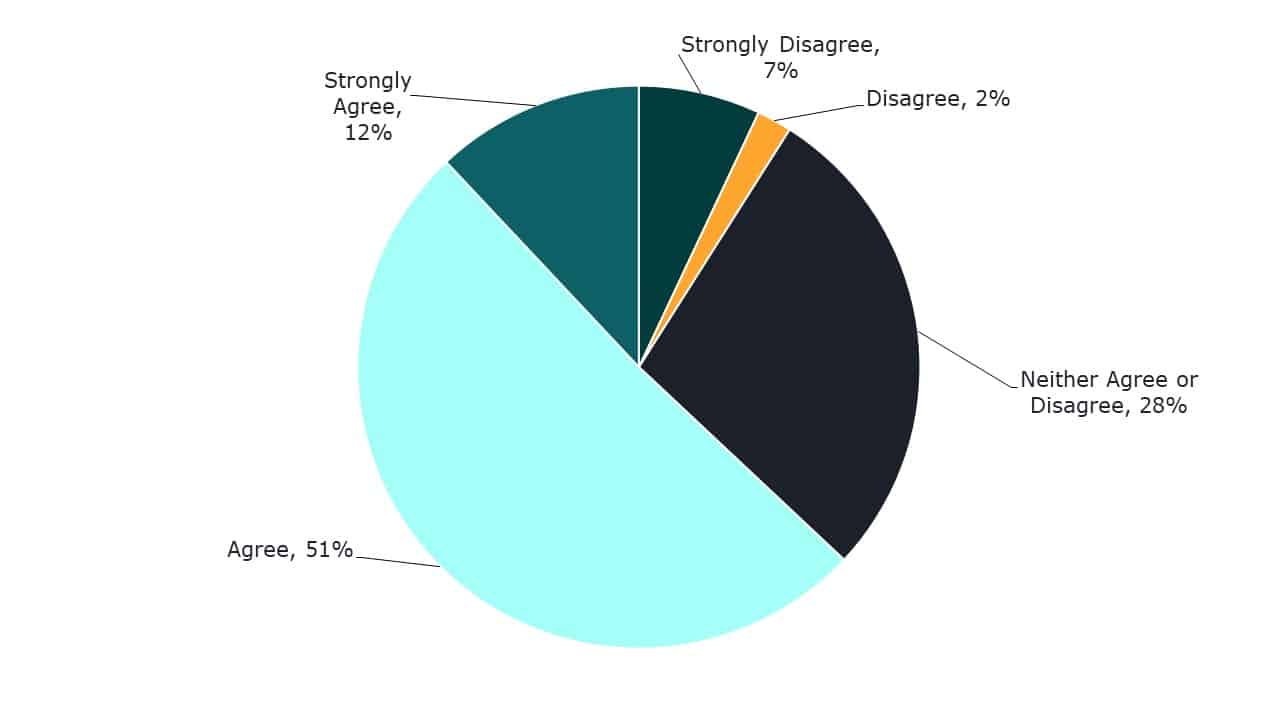
As could be reasonably predicted, 63% of respondents at least ‘agreed’ that they consider a company’s environmental credentials before joining, with only 9% disagreeing with the statement completely. Younger people were more likely to consider this a factor when joining a company, with only 25% of respondents over 35 actively agreeing with the statement. However, if presented with specific negative information about a company, how much does that opinion shift?
If I saw a negative article about a company regarding sustainability, it would influence my decision to join/apply.
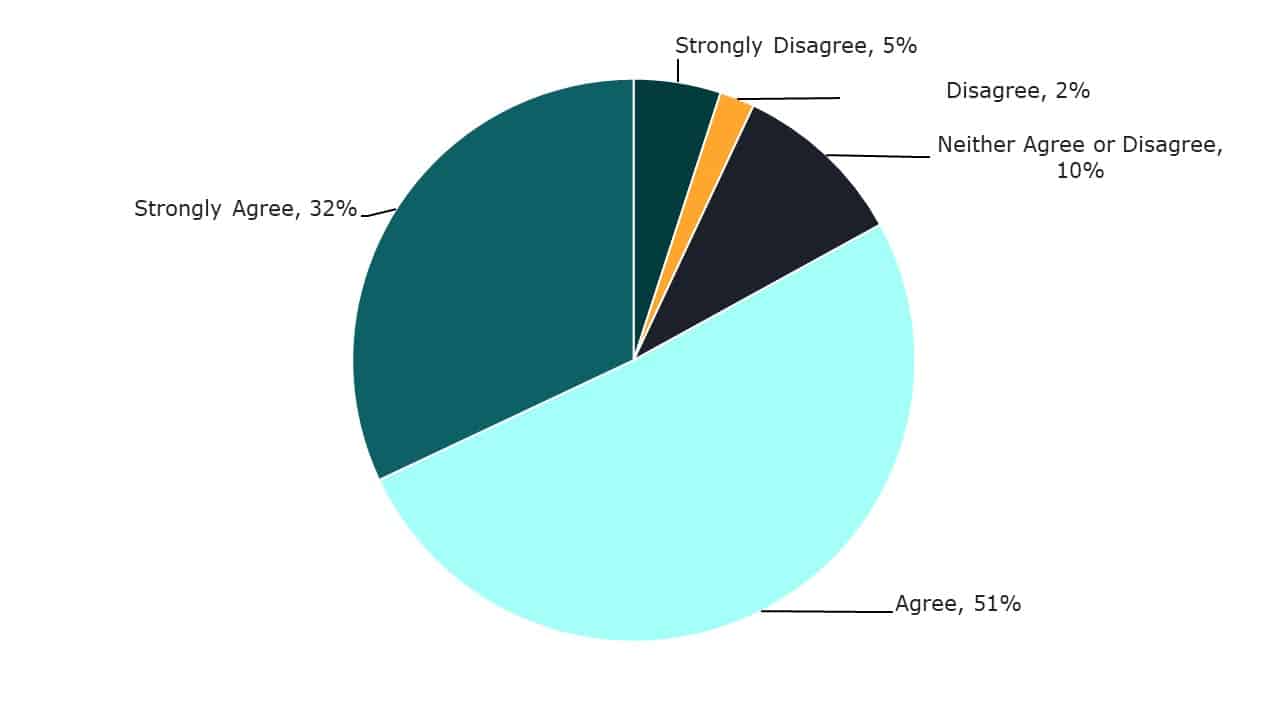
Again, as could be expected, there is a shift towards people agreeing that a negative article would influence their decision to apply for a particular company. Interestingly, however, the shift has been mostly from people who fell under ‘neither agree nor disagree’ (17% decrease) compared with people who at least disagreed before, where there was just a 2% reduction. This seems to suggest that some respondents are not influenced at all by a company not being considered sustainable and would work there regardless of negative press. Also, it may come as no surprise that the majority of those who believed that climate change had no negative impact on their life were not impacted by negative press.
If the company I was working at was not making progress in improving its sustainability/social responsibility, I would be more likely to leave.
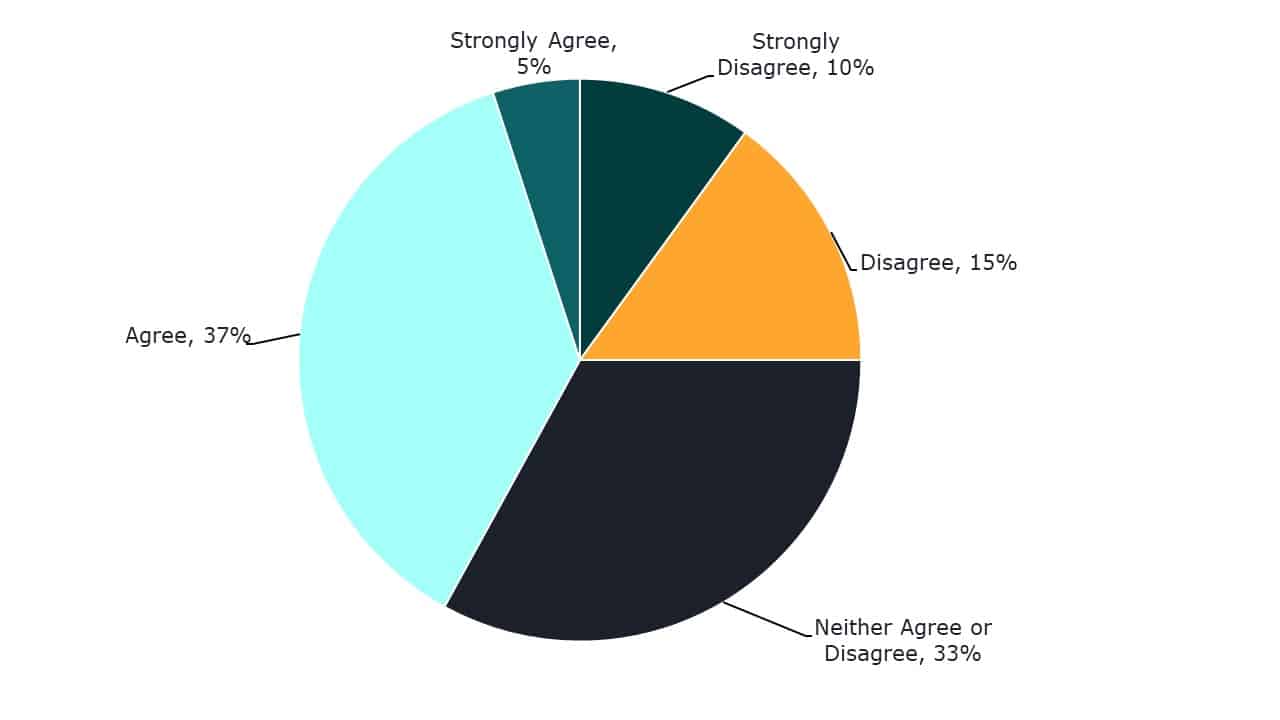
Perhaps more interesting is how people react when the company for which they are currently working is not making progress and how this influences their decision to move. There is a marked increase in people at least disagreeing with the statement (up to 25%) and a significant shift towards neutrality. Most telling is that whilst 83% of respondents agreed that they would potentially not join a company if they saw a negative article about them regarding sustainability, there is a sizeable drop to 42% of respondents who would leave their current role if their current employer was not improving in terms of CSR and sustainability.
There are some potential reasons for this. Firstly, there is more risk associated with actively leaving a company than joining one, therefore the personal risk is higher. As such, even if people feel it is the right thing, they may not be in a position to do so. Another potential reason for the shift in opinions is that once in the company, respondents would likely have more context to the situation than when applying, meaning they may be more understanding to the issue at hand and less influenced by the consequences of it.
I have made conscious decisions in my life that I know will affect the environment.
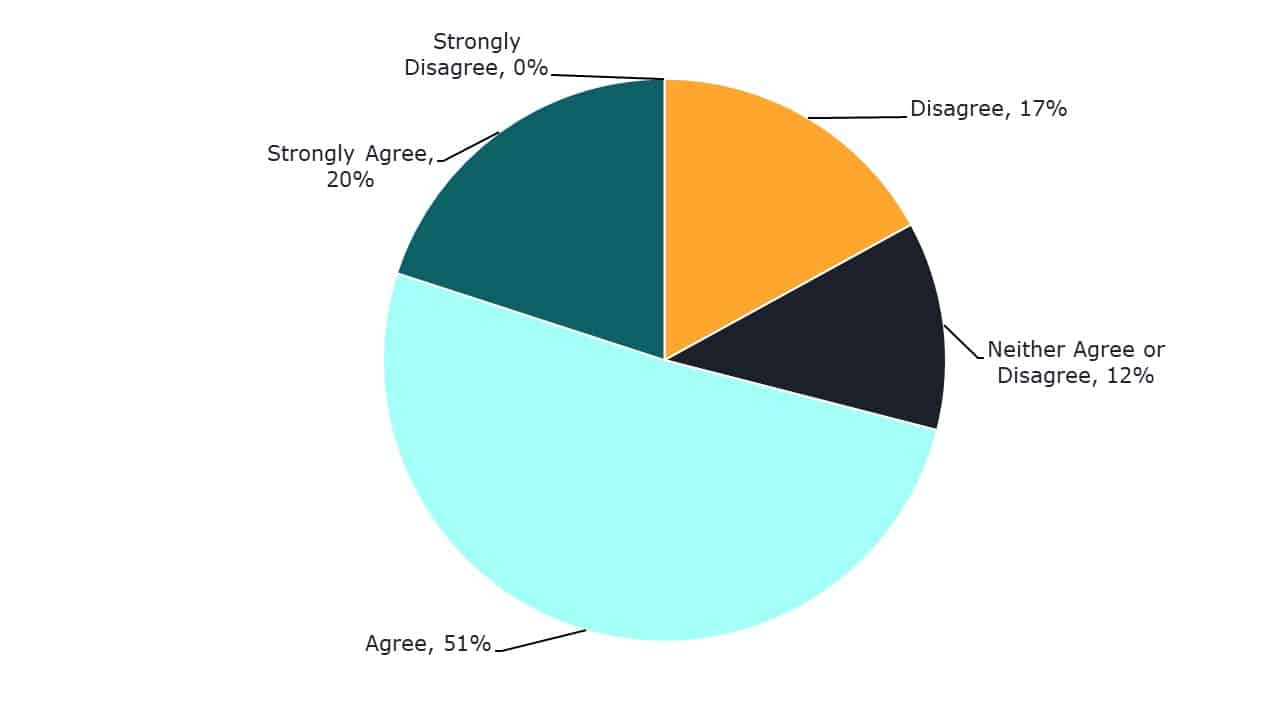
There was also an interesting insight given when people were asked about their personal decisions and circumstances regarding the environment and their impact on it. Just over 70% of respondents agreed that they had made conscious decisions that they know would have a negative impact on the environment. This is sometimes inevitable in particular scenarios, however this is unlikely to be the case across the board. With around 70% of people also agreeing they would be put off if a company had a negative impact on the environment, there is a clear trend between us holding companies to account, whilst also doing similar negative actions ourselves. What if the companies in question don’t have the ability to be more sustainable as the opportunity simply doesn’t exist? Is it fair to penalise them in this scenario? Like in our personal lives, this is unlikely to be the case the majority of the time, but it is still a distinct possibility that could unfairly impact a company in the process.
My personal circumstances have an impact on my ability to be as sustainable as possible.
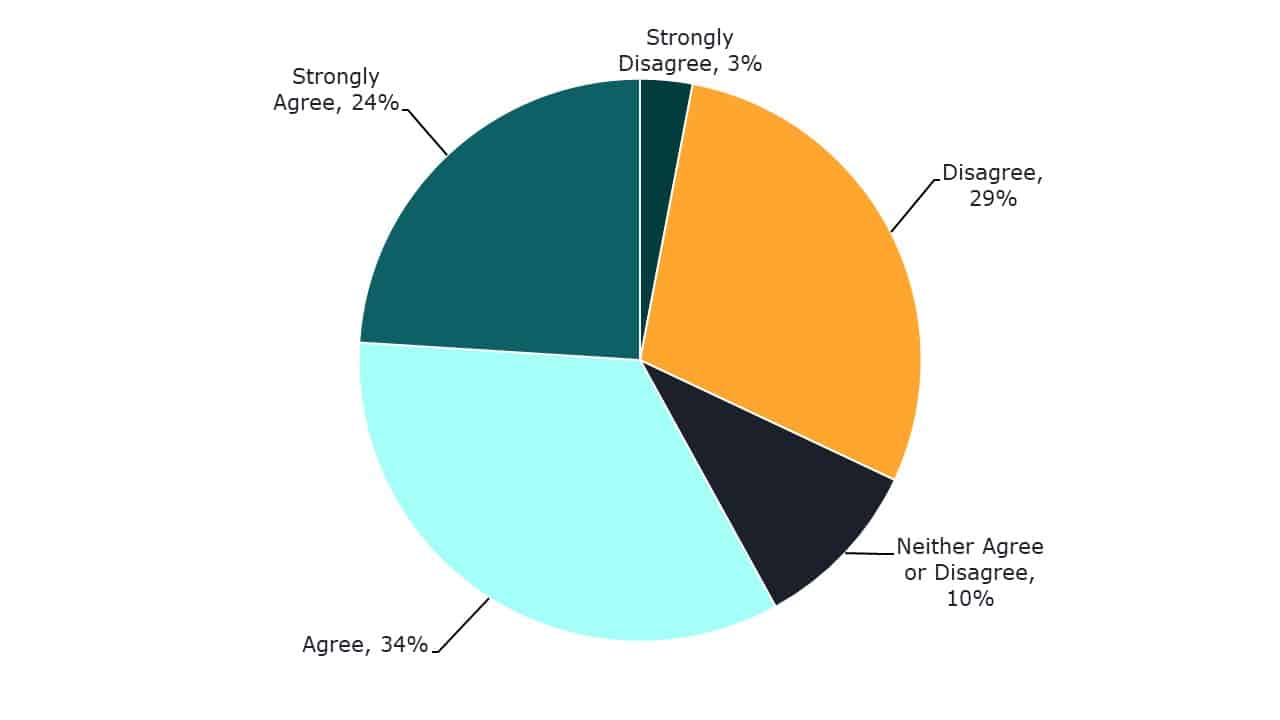
When we look further into why people may make the decisions they make in relation to the environment, one topic of interest is the individuals’ personal circumstances, especially amid a cost-of-living crisis. Typically, the mindset is that products that are better for the environment tend to be more costly, and 48% of respondents agreed that their current situation impacts their ability to be as sustainable as possible. It is well documented that sustainability needs to be made more accessible, not just through cheap green energy but in our day to day lives too. As a consumer, it is commonplace simply to have no access to the most sustainable option, however much we may be willing to pay and use it.
What do our attitudes towards sustainability mean for employers and consumers?
So, what does the data say about our attitudes toward sustainability, and what does it mean in practice? Firstly, for businesses it is clear that employees care strongly about how their employer (or prospective employer) acts in regard to sustainability and climate change and it is a key driver in decision making. Therefore, any firm ‘not acting’ may suffer from significant brain drain in both the short and long-term. Hence, green commitments not only support the environment, but the company itself. Since respondents were overwhelmingly willing to support in improving the sustainability/social responsibility offerings at their workplace, companies could stave off this brain drain, not only improving retention but boosting attractiveness to prospective employees.
This positive impact from employees can trickle down further. Many respondents stated that they struggled to be sustainable due to their circumstances or have made decisions they know have had a negative impact on the environment. If, by engaging with employees and building a stronger sustainable outlook, a company can address and remove some of these obstacles, the positive impact can be even greater. This is unlikely to solve every single problem, but it’s still a chance to help resolve some of the issues facing society.
Finally, it is clear from the data received that employees (respondents) care about sustainability and by extension, their employees actions towards it. As such, employers should take these attitudes as a positive and utilise them to their advantage, as by working with their employees to build a better CSR offering and by creating a positive impact on the world, the benefits can be felt both internally and externally. Climate change and sustainability are only going to grow as topics of importance in our lifetimes and only good can come from employers embracing the challenge and their employees stepping up to it.
At 4C Associates, we ensure the best sustainability practice is observed and applied to projects across all industries and subject matter. Our solution to sustainability strategy is based on a two-phase ‘ABC’ diagnostic and ‘4C’ implementation methodologies.
GET IN TOUCH WITH OUR TEAM TODAY
If you would like to learn more about our sustainability service offering and how we have helped companies achieve their sustainability goals, please feel contact Allison Ford-Langstaff. We’re always happy to share thoughts and learn from you as well.