
In a world of relentless disruption, transformation isn’t optional, it’s about survival. Whether embracing new technologies, reimagining operations, or entering new markets, organisations must evolve or risk irrelevance.
However, with high stakes and complex programmes, the risk of failure is equally significant. Failure to successfully deliver transformation can cause wider ripple effects, such as disenfranchising employees or creating unforeseen consequences in other parts of the organisation.
This is where Programme Assurance can act as a critical enabler of success, helping to protect the investment you’ve made in transformation and increasing certainty in the delivery of its goals.
What Is Programme Assurance?
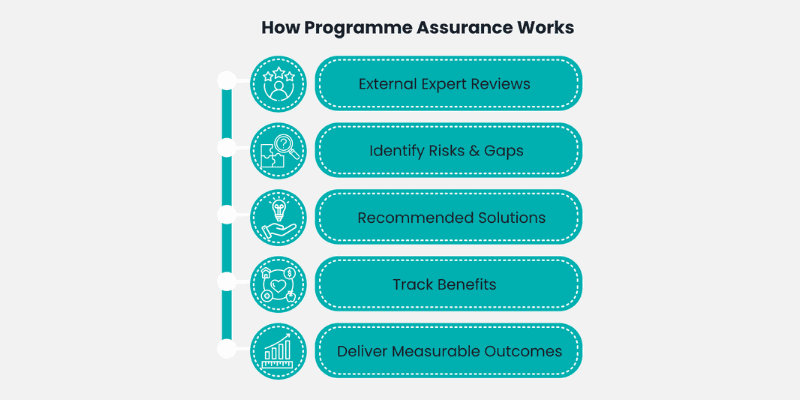
Programme assurance brings external expert eyes to your transformation, spotting risks before they derail progress. When obstacles arise, expert assurance helps clarify steps to regain progress. It’s more than just tactical delivery; it ensures proper processes, decisions, and controls are in place during the transformation.
Robust assurance empowers transformation leaders, the Board, regulators, sponsors, and teams by providing unbiased reviews of scope, risks, benefits, quality, and engagement; this actionable insight enables informed decisions on how best to ensure high risk programmes are set for success and how struggling programmes can be put back on track. Its goal is to give stakeholders confidence that the programme will deliver its objectives.
Why Is Programme Assurance Critical in Business Transformation?
When delivery is in full swing, it can be all too easy for organisations to make ill-informed decisions based on incomplete or biased information or fail to correct scope creep and misalignment with strategic goals.
Why Is Programme Assurance Critical in Business Transformation?
When delivery is in full swing, it can be all too easy for organisations to make ill-informed decisions based on incomplete or biased information or fail to correct scope creep and misalignment with strategic goals.
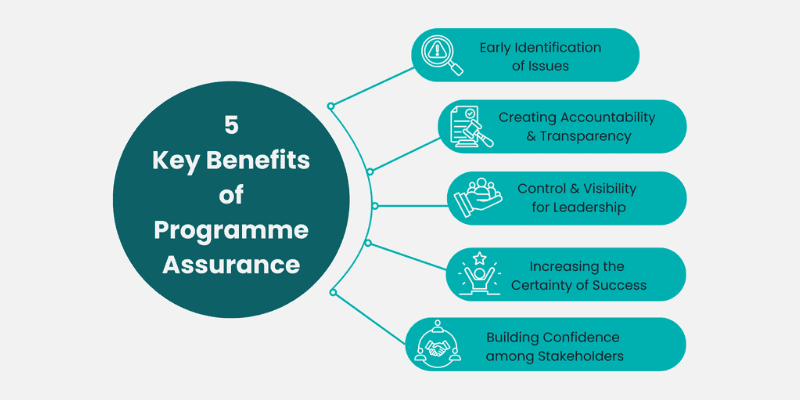
Effective and robust programme assurance provides significant value to a programme:
1. Early Identification of Issues
Independent assurance offers a fresh perspective, identifying misalignments, delays, or gaps early before they become costly.
Reviewing programme health at key milestones allows organisations to adjust early, making corrections cheaper and more effective, supporting engagement and momentum.
2. Creating Accountability & Transparency
Programme Assurance improves accountability by defining roles, responsibilities, and decision hierarchies.
This transparency supports well-informed, timely decision-making at all levels.
3. Control & Visibility for Leadership
Transformation programmes often fail because they lack effective means to identify, manage, and address challenges early. Issues often become unmanageable by the time they’re recognised.
Programme assurance provides real-time insights, helping leaders maintain control and prevent crises.
4. Increasing the Certainty of Success
Delivering a transformation isn’t the whole story. True success means delivering measurable benefits.
Programme Assurance helps organisations track, measure, and prioritise benefits from design to realisation, ensuring value is promised and delivered. It verifies that business cases stay valid and change initiatives align with their goals.
5. Building Confidence Among Stakeholders
From staff to leaders and partners, confidence is crucial for transformation momentum.
Independent assurance objectively validates progress and risk management, maintaining trust and buy-in across the organisation.
Key Components of an Effective Programme Assurance Delivery
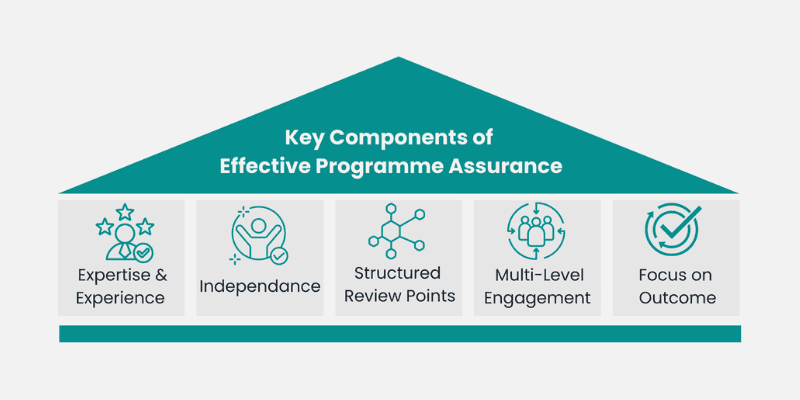
To deliver its full value, programme assurance must be tailored to the complexity and context of the transformation. Here are our key elements for an effective assurance deployment:
- Expertise & Experience: Great assurance comes from an experienced team with demonstrable expertise in operating in your context. An experienced team knows what good looks like, what works and, critically, what doesn’t.
- Independence: Assurance must have autonomy to provide an objective perspective. Equally, an effective assurance team understands when to intervene and when not to. In most cases, assurance must be light and not interrupt, distract, or add undue complication to delivery.
- Structured Review Points: Regular assurance reviews should be built into the programme lifecycle. For example, at initiation, through key milestones, and to programme closeout. Well-delivered assurance can provide real-time insight, not just in the final report but throughout the project.
- Multi-Level Engagement: Assurance should engage with stakeholders across all levels of the organisation. All ranks from project teams to senior executives are essential to the progression and successful delivery of a Transformation programme.
- Focus on Outcomes: The assurance process is most effective when it is outcome-oriented, aligning activities with strategic objectives and measuring the gap between current (as-is) and desired states (to-be).
Conclusion
Transformation is complex, but failure isn’t inevitable. With proper support, structure, and oversight, organisations can better manage risk, improve governance, and achieve lasting value. Programme Assurance helps ensure transformation delivers tangible benefits.
GET IN TOUCH WITH OUR TEAM TODAY
Don’t leave transformation to chance. Embed Programme Assurance early and turn ambition into achievement. To explore how it can support your journey, connect with Andy Hemsley.